

TL;DR
YeshID and AccessOwl both serve teams that want onboarding, offboarding and access requests without a complicated enterprise identity rollout. Both were built to solve the SCIM tax. YeshID also offers a free plan for teams under 20 users and an AI assistant called Rae. Buyers we talked to who assessed or purchased both YeshID and AccessOwl ran into three problems with YeshID:
Many apps stay manually managed: Every app goes on YeshID's onboarding checklist, but only apps with a working integration are automated. Buyers we talked to said most of their apps stayed as manual tasks for someone on the team.
Relies on API connectors & restricted by SaaS plan: YeshID connects to apps through their REST APIs or SCIM. Its own docs say it can connect "If your application has a REST API & if you have the right subscription."
Setup and rollout take work: Connecting an app can mean entering endpoint URLs, API tokens and SCIM URLs yourself. Some buyers told us their rollout never got past the first few apps.
A systems admin at a 220-person healthcare software company we talked to compared the two solutions before they switched to AccessOwl:
"Our use case with AccessOwl is that you have way more integrations that we need than YeshID currently has. We looked at the list of AccessOwl's integrations and I don't think you guys miss a single app that we have, which is awesome. There is more granular automation."
Systems admin, 220-person healthcare software company
AccessOwl as the alternative to YeshID for growing teams
AccessOwl is built for growing companies from around 30 employees up to several hundred. It's for teams that want onboarding, offboarding, approvals and access reviews to run on their own across most of their stack.
No API needed: AccessOwl provisions through a service account in each app using browser automation. Apps without a usable API are covered.
500+ integrations: Our integration catalog lists 496 SaaS apps, and every one of those supports automatic provisioning and deprovisioning.
Quick to roll out: Connecting an app to AccessOwl doesn't require endpoint URLs, API tokens or SCIM URLs.
An IT manager at a 100-person equity management company told us:
"AccessOwl is definitely the best solution I've seen so far. We've looked at a couple others, YeshID and Corma. Of the other ones we've checked out they use an AI tool for the non-enterprise apps. I didn't love that idea because we don't trust an AI with admin access to our systems."
IT manager, 100-person equity management company
Sary, a B2B marketplace that hired nearly one person every workday on its way past 600 employees, runs access through AccessOwl:
"Since we started using AccessOwl I haven't received a single direct message to request access to tools."
Khalifah Alsadah, Product Manager, from Sary's success story
Why teams look for a YeshID alternative
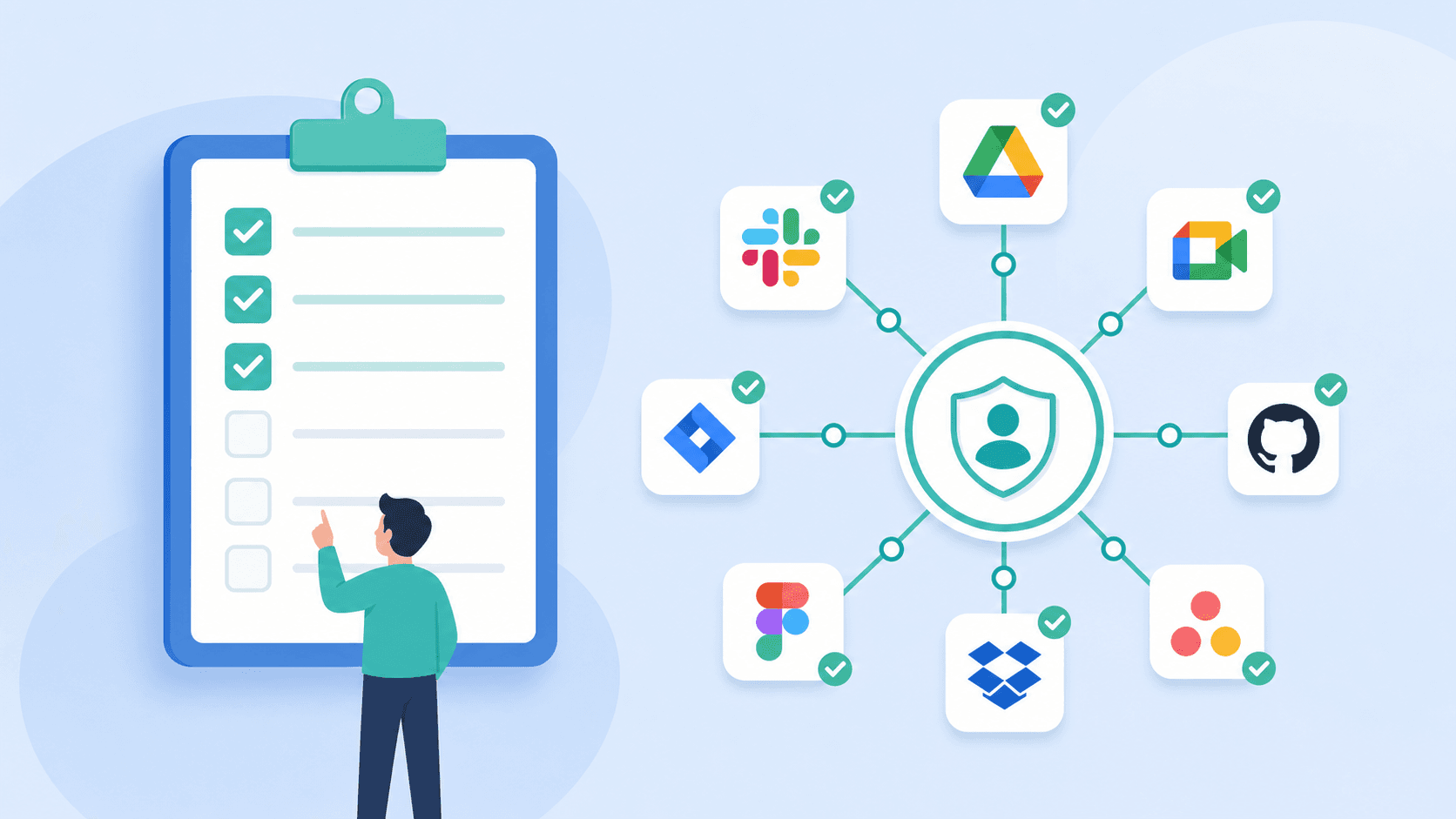
YeshID gives a small IT team a good first structure for access: a checklist for every hire, an app inventory, a login page for employees, and a free plan for teams under 20. The teams we talked to who left YeshID got stuck on the next step: getting most of their apps to provision and deprovision without someone doing it by hand.
The IT team lead at the same healthcare software company told us why they moved:
"Our CTO he was uncomfortable with YeshIDs lack of integrations. We found AccessOwl and noticed you integrate with a ton of our applications."
IT team lead, 220-person healthcare software company
Many apps stay manually managed
In YeshID, every app on an onboarding or offboarding workflow gets a step. YeshID's docs describe what happens to that step: it is "Automated if the app has an integration; otherwise a manual checklist task". A manual task is assigned to a person, who does the work and marks it complete.
The checklist covers your whole stack. The automation only covers the apps YeshID can connect to.
"YeshID is more of a checklist for us right now."
Recruiting and HR lead, 60-person AI infrastructure startup
A healthcare software company measured the switch the same way. With AccessOwl, the IT team lead was able to check that most of their stack would be automated before committing to a solution:
"With AccessOwl about 90% of our apps are covered. It's way less manual."
IT team lead, 220-person healthcare software company
Mostly API connectors
YeshID's pitch is to "Connect to any app with an API in seconds." It connects through SCIM and REST APIs, and its AI assistant Rae "generates and maintains integration code across REST, SCIM, and custom APIs."
That goes further than tools that only work over SCIM. YeshID set out to solve the SCIM tax, the same problem AccessOwl was built around. An API-based approach only gets partway there. Two things get in the way:
Apps need an API: Many SaaS tools have a thin user-management API or none at all. Those apps fall back to manual checklist tasks.
APIs sit on plans too: Plenty of vendors keep their admin API on a higher tier. YeshID's own docs say capabilities depend "for some apps on the license tier of the app itself."
Slack is a good example. YeshID's Slack documentation reads:
"SCIM requires the Slack Business+ or Enterprise Grid plan."
The same page says the standard single-workspace connection can't create or deactivate Slack accounts. To automate Slack accounts with YeshID, you need SCIM on Business+ or Enterprise Grid. For those apps, you're back to paying the SCIM tax.
AccessOwl doesn't need an API. AccessOwl provisions Slack on any paid plan, and the same is true for 500+ other SaaS apps.
Setup and rollout take work
YeshID offers three kinds of integration: prebuilt, SCIM, and ones you build yourself. Its setup guide shows what the last two involve:
SCIM: You enter your app's SCIM endpoint URL and pick the actions to enable. The app usually needs SCIM switched on, which often means its enterprise plan.
Build your own: You pick an authentication type (Bearer, OAuth, Basic or API key). Then you enter the endpoint URL, HTTP method and payload for each action, and map the fields.
Code-backed integrations: YeshID's script editor and custom actions are Business plan features (their highest, custom-priced tier).
The IT lead at the 60-person AI infrastructure startup we talked to put the setup effort first:
"YeshID does a lot of things, but one of the things that it doesn't do well is ease of setup in my opinion"
IT lead, 60-person AI infrastructure startup
While trialling AccessOwl, the same IT lead described the difference:
"With AccessOwl all we need to do is invite the account, give it appropriate permissions, and then automatic provisioning is ready. We don't have to set up any kind of SCIM URL, API request, or any of that, like in YeshID."
IT lead, 60-person AI infrastructure startup
Comparing YeshID v.s. AccessOwl: Features and Pricing
YeshID | AccessOwl | |
|---|---|---|
Built for | Very small IT and security teams; free for teams under 20 users | Companies from around 30 employees to several hundred; solo IT admins and small IT teams |
Primary identity provider | Google Workspace and Microsoft 365; Okta on the Business plan | Built for Google Workspace and Microsoft Entra; also integrates with Okta |
How apps are provisioned | SCIM and REST API connectors, plus custom API connectors you build; manual checklist tasks for the rest | Service accounts and browser automation for most apps; APIs and SCIM where they fit |
SaaS apps in integration catalog | 158 listed in its docs, 140 with provisioning; some depend on the app's plan | 496, each with provisioning and deprovisioning |
Self-service access requests | Slack, Microsoft Teams, and a web login page with app tiles | Slack, web dashboard with app tiles, and MCP coming soon |
AI assistant | Rae: explains access, builds workflows, and writes integration code (paid plans) | Claude in Slack (Claude Tag) and a public REST API |
Time-based access | Yes, on the Business plan | Yes |
Free plan | Yes, for teams under 20 users | No; 7-day free trial (PoC) instead |
Reviews | Nearly no public reviews (one review on G2) | Rated 4.9 on G2 and Capterra |
Pricing | Public pricing: free under 20 users; Growth $9/user/month billed annually; Business is custom | Public pricing; $250/month spend minimum; no seat or employee minimum; no SCIM tax |
Integration counts from YeshID's supported-integrations documentation and AccessOwl's integrations page. Ratings from G2 and Capterra. October 2026.
Provisioning and app coverage
YeshID
API-based connectors: YeshID connects to apps through prebuilt integrations, SCIM, or REST API connectors you configure. Rae can write and maintain the integration code.
A catalog without capability details: The integrations page shows app tiles and promises "virtually infinite applications", but tiles don't say what YeshID can do in each app.
The real list is in the docs: YeshID's supported-integrations page lists 158 apps, 140 with provisioning. It notes that capabilities can depend on the app's own plan.
Manual tasks for the rest: Apps without an integration become checklist items. YeshID's GitHub doc says GitHub onboarding and offboarding steps "run as manual tasks."
"We have a series of SaaS platforms we don't want to have to upgrade to enterprise. Through YeshID, in order to get some of the APIs to work properly you need to use enterprise plans."
IT lead at a 60-person AI infrastructure startup
AccessOwl
A public catalog: 500+ integrations are listed. 496 of them are SaaS apps, and every one supports provisioning and deprovisioning.
No SCIM or API required: AccessOwl automates apps that offer neither SCIM nor a usable API, on the plan you already pay for.
Service accounts first: Most apps are provisioned through browser automation on a service account. SCIM, APIs and other connectors still run where they're the better fit.
"We regularly use AccessOwl to manage access and auditing of our 100+ applications and to do so without having to setup clunky, cumbersome SAML integrations."
CTO, small business, G2 review of AccessOwl
Integrations with IdP & HRIS systems
YeshID
Identity providers: Google Workspace, Microsoft 365 and JumpCloud. Okta is available on the Business plan.
HR systems: Built-in connectors for BambooHR, Paylocity, Factorial, UKG Pro and others. HRIS sync is a Business plan feature.
AccessOwl
HR systems: Connects to 54 HRIS systems out of the box.
Works with what you have: Sits on top of Google or Microsoft with no migration, and can be live within a day.
Google Workspace and Microsoft first: Designed for teams whose primary identity layer is Google Workspace or Microsoft Entra.
Okta: Okta is supported too.
Onboarding and Offboarding

YeshID
Workflows anyone can follow: Onboarding and offboarding run as workflows of tasks. Custom tasks cover anything YeshID doesn't automate (like ordering equipment), so HR can run them too.
Templated emails: A workflow can send a custom email, such as a welcome email with first-login details for a new hire.
Automated where integrated: Accounts are created and removed in apps with a working integration. Other apps become manual checklist tasks.
HR triggers on Business: Starting workflows from your HRIS needs the Business plan.
AccessOwl
Offboarding from the HRIS: Once the last workday in your HRIS has passed, offboarding starts. AccessOwl removes access inside each app and logs each step as audit evidence.
Onboarding from the HRIS: A new start date in your HRIS starts onboarding. AccessOwl applies the access template for the role, and managers can adjust it for the individual hire.
Shadow IT scan: At offboarding, AccessOwl lists apps the person signed up for without IT, like password sign-ups or "Sign in with Google" accounts. Across our customers, employees typically use 5x more apps than IT manages.
Accounts ready on day one: Accounts and permissions are created inside each app before the first morning, down to Slack channels and team spaces.
Self service access requests
YeshID
Requests in Slack and Teams: Employees type /request in Slack or use the Microsoft Teams app. Access requests are available on every plan.
A login page for employees: Each employee gets one page with a tile for every app they have and can launch apps from it.
Time-based access: Grants with a set duration are revoked when the window ends. This is a Business plan feature.
AccessOwl
Ask in Slack or on the web: Employees pick an app and a permission level in Slack or the web portal in a few clicks. Managers can request on behalf of colleagues and contractors.
An audit-ready log: Every request, approval and change records who asked, who approved and when. You can hand the log straight to an auditor.
Approvals to the right person: The approver, usually the manager or IT admin, gets a one-click task in Slack, email or the dashboard. Admin roles can require a multi-step chain.
Account created on sign-off: Once the last approval is in, AccessOwl creates the account at the requested level. Apps without an integration become a tracked task for the tool owner.
Time-based access is built in too. Set an end date for a contractor or a short stint on a sensitive system, and AccessOwl takes the access away when it passes.
Access Reviews and Audit Evidence
YeshID
Review campaigns: Assign reviewers, collect decisions, track exceptions and export reports for auditors. Audit campaigns are on the paid plans.
Manual apps included: Apps without an integration still produce reviewable records, with follow-up actions tracked.
Shadow IT visibility: YeshID shows apps employees sign into with Google or Microsoft and can revoke those OAuth tokens.
AccessOwl
Evidence for auditors: Each decision is saved with the reviewer's reason. Export the report or push it to Vanta for SOC 2 and ISO 27001 audits.
Users pulled from every app: AccessOwl imports users and permissions from each connected app. It flags former employees and accounts that match no one in your directory.
Fixed during the review: Access a reviewer flags is removed right away, with no follow-up cleanup ticket.
Decisions with context: Reviewers see how access was granted, who approved it, earlier review decisions and recent changes. They approve, change or revoke on the same screen.
AccessOwl customers get through access reviews in about 10 minutes per app, down from the 2 hours a manual review usually takes.
Pricing
YeshID
Free for small teams: YeshID's Freemium plan is free for teams under 20 users.
Growth: $9 per user per month, billed annually.
Business: Custom pricing. HRIS sync, role-based access, time-based access, Okta, and the script editor sit on this plan.
App plans can add costs: Where an app keeps SCIM or its admin API on a higher tier, YeshID needs that tier. Slack is one example.
AccessOwl
No SCIM tax: AccessOwl provisions through a service account on the plan you already have, so you never upgrade an app to unlock its API. That SSO tax can run to tens of thousands of dollars a year.
Published prices: AccessOwl's prices are on its website, so you can estimate your cost without a sales call.
No seat minimum: There's no minimum number of seats or employees, just a $250 monthly minimum spend. Teams start at around 30 employees and grow to several hundred.
User Reviews: AccessOwl v.s. YeshID
AccessOwl is rated 4.9 out of 5 on G2 and Capterra. YeshID has almost no public reviews yet: one (positive) review on G2 and none on Capterra, as of October 2026.
"Thanks to AccessOwl's ease of use, it was very quickly adopted as the starting point for all access requests."
Director of Platform Engineering, mid-market company, G2 review of AccessOwl
Who YeshID is best for
YeshID is a better fit when you:
Have fewer than 20 people and want to start for free
Want a structured onboarding checklist that covers HR tasks as well as app access
Want a single login page with app tiles for employees
Like the idea of an AI assistant that builds workflows and integrations
Use apps that are mostly in YeshID's supported list, on plans that expose their APIs
Who AccessOwl is better for
AccessOwl is a better fit than YeshID when you:
Want most of your apps to provision and deprovision on their own, not sit on a checklist
Use apps that have no usable API or SCIM
Don't want to build connections or upgrade apps to unlock their APIs
Run on Google Workspace or Microsoft Entra as your primary identity layer
Have a small IT team or one person, and around 30 employees up to several hundred
Questions to decide between YeshID and AccessOwl
How many of your apps will create and remove accounts automatically, and how many will stay manual checklist tasks?
Which of your apps keep their admin API or SCIM on a higher plan, and what would those upgrades cost?
What does setup involve for each app: a connection you configure, or an account you add?
Are you under 20 people and looking for a free starting point, or planning to automate access across a growing stack?
Note: This article was written on October 1, 2026 with information available to us from conversations with buyers and public information about YeshID. If any information is inaccurate or misrepresents YeshID, get in touch with us.
FAQs
Does YeshID rely on API connectors?
Mostly. YeshID connects to apps through prebuilt integrations, SCIM, or REST API connectors you configure. Its AI assistant Rae can write the integration code. Its docs say it can connect "If your application has a REST API & if you have the right subscription." Apps without an integration become manual checklist tasks. YeshID's supported-integrations page lists 158 apps, 140 with provisioning. AccessOwl provisions through service accounts and browser automation, so it doesn't need an API. Its catalog lists 496 SaaS apps, each with automated provisioning and deprovisioning.
Does YeshID avoid the SSO tax?
Partly. YeshID was built to get around the SCIM tax, and connecting over REST APIs reaches more apps than SCIM alone. But some apps keep SCIM or their admin API on a higher plan, and YeshID needs that plan too. YeshID's Slack docs say SCIM requires Slack Business+ or Enterprise Grid, and its standard Slack connection can't create or deactivate accounts. AccessOwl provisions through a service account on the plan you already have, including Slack on any paid plan.
How much does YeshID cost?
YeshID's pricing page lists three plans. Freemium is free for teams under 20 users. Growth is $9 per user per month, billed annually. Business has custom pricing and includes HRIS sync, role-based access and time-based access. Where an app keeps SCIM or its admin API on a higher plan, that upgrade is an extra cost. AccessOwl publishes its pricing. Its provisioning doesn't depend on those app upgrades.
What are the best alternatives to YeshID?
AccessOwl is the closest alternative for teams from around 30 employees to several hundred that want most of their apps automated without needing APIs or SCIM. Torii and Corma are also worth a look if you want SaaS management with access workflows. For larger companies running a dedicated identity governance program, the enterprise options are platforms like Lumos and ConductorOne.
When should I choose AccessOwl as the alternative to YeshID?
AccessOwl is the right alternative to YeshID when you want most of your apps to provision and deprovision on their own; use apps without a usable API or SCIM; don't want to build connections or upgrade apps to unlock their APIs; run on Google Workspace or Microsoft Entra; and have a small IT team at a company of around 30 employees up to several hundred.
How do I know if YeshID is the right solution for me?
Are you under 20 people and looking for a free plan? Do you mainly want a structured onboarding checklist and a login page for employees? Do you like the idea of an AI assistant that builds workflows and integrations? Are most of your apps in YeshID's supported list, on plans that expose their APIs? If most of the answers are yes, YeshID is likely a strong fit.