

TL;DR
ConductorOne (now C1) is built for companies that already run a mature identity stack, with Okta at the center and broad SCIM and SAML coverage, and want a dedicated governance layer on top. Buyers and customers we talked to run into three recurring problems:
Governance first, provisioning second: C1 is strongest at access reviews and policy. Its catalog lists 455 apps, but C1's own connector docs show only about 30% of its connectors can provision accounts (create/delete automatically). So a large portion of apps are left to manual provisioning.
Built on an Okta foundation: C1 works best once Okta and broad SCIM and SAML coverage are in place. Where a C1 connector can't create accounts, your identity provider has to do it.
Priced for enterprise budgets, plus the SSO tax: C1's AWS Marketplace listing starts at $100,000 a year. Many of its connectors also need each app's enterprise plan before provisioning works.
"Our team bought Conductor One believing it could do the whole lifecycle provisioning, because it's advertised like it can. It does not. They have maybe 50 to 80 pre-built connectors. The vast majority of their connectors do not have account provisioning or deprovisioning components built out."
IAM engineer at a fast-growing, 120-person developer platform we spoke to
AccessOwl as the alternative to ConductorOne for smaller enterprises
AccessOwl is built for growing companies that want access automation (onboarding, offboarding, approvals, access reviews) without needing a fully mature enterprise identity stack.
AccessOwl is viable for companies down to 30 employees and it keeps working as you grow to several hundred and beyond.
AccessOwl was a pioneer of automated provisioning without relying on SCIM. That's why our 500+ integrations don't depend on upgrading each tool to its enterprise tier.
AccessOwl works before you have a heavy identity governance program run by a large IT team. AccessOwl is frequently run by solo IT admins or early IT hires.
Sary, a B2B marketplace, used AccessOwl as it scaled to more than 600 people:
"Since we started using AccessOwl I haven't received a single direct message to request access to tools."
Khalifah Alsadah, Product Manager, from Sary's success story
Why teams look for a ConductorOne alternative

C1 is clear about who it wants as a customer. Its website speaks to security teams, IAM engineers and risk and compliance leaders. The typical C1 buyer has a security team, Okta at the center and separate budget for a governance program. Companies without all three feel the pain when they see the price quote.
An IT lead at a European fintech with about 650 users, who evaluated C1 and Lumos, told us:
"The first tools we looked at were Conductor One and Lumos. I liked the product itself. But they were super, super expensive for us. They quoted me something around 80k. That's out of the budget constraints we have."
Three problems came up frequently when we talked to prospective buyers and customers:
Governance first, provisioning second
C1's core is identity governance: access reviews, policy, entitlements and just-in-time access. It does those well. Creating and removing accounts inside each app is a different job, and it depends on which connectors support it.
Buyers who expect full lifecycle automation can be surprised.
"the last mile has to be done by humans. And spending time on those manual tasks after implementing a tool is annoying."
C1's own catalog doesn't make this easy to check before you buy. Its catalog lists 455 apps, but C1's own connector docs show only about 30% of its connectors can provision accounts (create/delete automatically). So a large portion of apps are left to manual provisioning.
Okta dependency
C1 is a governance layer that sits on top of your identity provider. It has connectors for Okta, Microsoft Entra, Google Workspace and others. Where a C1 connector can't create accounts, provisioning falls back to the identity provider, usually by assigning the person to the right group. In practice that means Okta, with SCIM set up for each app.
That matches what we heard from buyers. The companies we talked to that chose C1 had standardised on Okta for every app and wanted governance layered on top of it. They also had a security or identity team to run it.
Enterprise pricing and the SSO tax
C1 doesn't publish prices. Its AWS Marketplace listing prices platform access at $100,000 for a 12-month contract. Prospects we spoke to often saw C1 as an enterprise tool before price even came up. A buyer at a 50-person infrastructure company told us C1's sales team told them:
"We're for enterprise and that's our minimum bar."
The contract is only part of the cost. Many of C1's connectors provision through each app's SCIM or admin APIs, and SaaS vendors usually lock those behind their enterprise plans. That's the SSO tax.
C1's own Slack documentation reads:
"A limitation in the Slack APIs means that automatic account provisioning is not currently supported for Slack Pro workspaces."
The same applies to Slack Business+. To have C1 create Slack accounts automatically, you need Slack Enterprise Grid for every user. Notion is similar: C1's docs say the connector can't be used "with the Free, Plus, or Business editions of Notion." Multiply that by every tool you want to provision, and the real cost of C1 grows well past its contract.
In contrast, AccessOwl provisions Slack on any paid plan, and the same is true for 500+ other SaaS apps.
"With AccessOwl the same process takes less than a minute and works with the click of a button."
Martin Seener, Senior Director of IT Administration, from viafintech's success story
Comparing ConductorOne v.s. AccessOwl: Features and Pricing
C1 (ConductorOne) | AccessOwl | |
|---|---|---|
Built for | Security and identity teams governing access at scale | Companies from around 30 employees to several hundred; solo IT admins and small IT teams |
Primary identity provider | Works with Okta, Microsoft Entra, Google Workspace and others; most often run on Okta by buyers we spoke to | Built for Google Workspace and Microsoft Entra; also integrates with Okta |
How apps are provisioned | Pre-built API and SCIM connectors; custom connectors built on the open-source Baton SDK | Service accounts and browser automation; APIs and SCIM where they fit |
SaaS apps in integration catalog | 455 listed; about 118 of 392 documented connectors can create accounts | 496, each with provisioning and deprovisioning |
Self-service access requests | Web, Slack, Microsoft Teams, MCP, API and CLI | Slack or web dashboard with app tiles. MCP and API coming soon. |
Time-based access | Yes | Yes |
Pricing | Quote requires a multi-call sales process; AWS Marketplace listing at $100,000 for 12 months | Public pricing; $250/month spend minimum; No seat or employee minimum; No SSO tax |
Catalog counts from each vendor's integrations page. C1 provisioning counts are from its connector documentation, September 2026.
Provisioning and app coverage
C1
Connector-based provisioning: C1 connects to apps through pre-built connectors that use each app's API or SCIM. Teams can build their own with C1's open-source Baton SDK.
A large catalog, narrower provisioning: C1's catalog lists 455 apps. Of the 392 connectors with a capability table in C1's docs, about 118 can create accounts. About 222 can only sync data for reviews.
Plan requirements per app: Several connectors need the app's top tier. C1's docs say "The Cursor connector requires the Cursor Enterprise plan." Lucidchart account provisioning is "only available on Lucidchart accounts with Enterprise licenses."
AccessOwl
Provisioning through service accounts: Most provisioning runs through browser automation on a service account. SCIM, APIs and other connectors are still available where they make more sense.
Apps without SCIM or APIs: AccessOwl can cover apps that don't offer SCIM or an API at all. Our Notion, Asana, Cursor and Lucidchart integrations need no specific plan.
Public catalog: 500+ marketed integrations, of which 496 are SaaS apps, each with provisioning and deprovisioning.
Integrations with IdP & HRIS systems
C1
Several identity providers: C1 has connectors for Okta, Microsoft Entra, Google Workspace, JumpCloud, OneLogin and Ping.
Most at home on Okta: The companies we talked to that chose C1 had standardised on Okta and wanted governance layered on Okta groups.
HR systems: Connectors include BambooHR, HiBob, Rippling, Workday and Personio.
AccessOwl
Is built for teams still on Google Workspace or Microsoft as the primary identity layer
Integrates with Okta
Layers on top of Google or Microsoft and can be live in one day. No rip and replace.
Integrates with 54 HRIS systems
Onboarding and Offboarding
C1
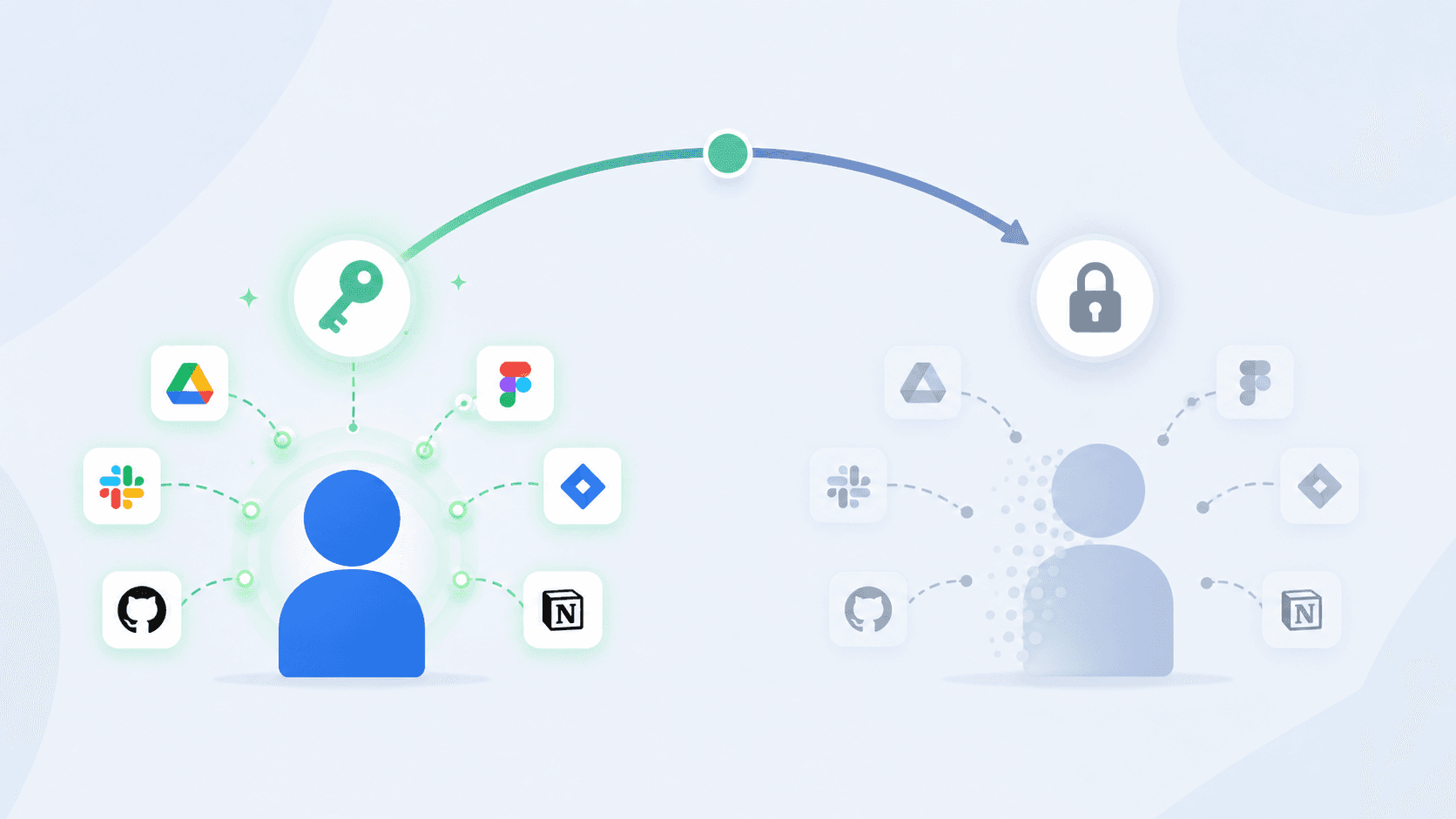
HR-driven workflows: Hires, department changes, manager changes and employment status changes in the HR system start the right workflow automatically.
Birthright access: C1 grants access based on role, department, location and policy before a new hire starts, in the systems its connectors can provision.
Offboarding across connected systems: C1 suspends accounts, removes access and notifies owners when employment status changes. Apps without account provisioning need another path, such as the identity provider or a manual task.
AccessOwl
HRIS-triggered onboarding: A start date in your HRIS kicks off onboarding. The employee's access template is determined from their role. Managers can make small changes for the individual role if needed.
Access ready on the first morning: AccessOwl creates the accounts and permissions inside each app, including Slack channels and team spaces.
HRIS-triggered offboarding: An end date in your HRIS triggers offboarding once the employee's last workday ends. AccessOwl revokes access inside each app and logs every action as audit evidence.
Shadow IT scan: Offboarding lists apps the employee signed up for on their own outside of IT's visibility, such as password sign-ups or "Sign in with Google" accounts. These usually get missed and later turn into audit findings. Across our customer environments, employees have usually signed up for 5x more apps than IT manages.
At Maxio, onboarding a new hire used to take 45 minutes to an hour. With a role template in AccessOwl, Shane Fritts told us:
"Five to ten minutes if you're not distracted, tops"
Shane Fritts, Sr. IT Manager, from Maxio's success story
Self service access requests
C1
Request from anywhere: People and AI agents request access from the web, Slack, Microsoft Teams, MCP, an API or a command-line tool. One catalog covers apps, MCP servers and AI tools.
Policy before provisioning: Routine access can be auto-approved. Sensitive requests are routed using identity, role, resource and risk context.
Just-in-time access: Grants are scoped to an entitlement and a duration, including break-glass access. Access is removed when it expires or goes unused.
"Having the product reach into our entire environment would be super helpful."
IT services professional, mid-market company, G2 review of C1
AccessOwl
Request from Slack or the web: Employees request apps and permission levels in a few clicks in Slack, or through a web portal. Managers can also request access on behalf of colleagues and contractors.
Approvals routed to the right person: Approvers get a 1-click task in Slack, email or the web dashboard. Usually that's the manager or IT admin. You can also add a multi-step chain or require stricter sign-off for admin roles.
Provisioned once approved: When the last approver signs off, AccessOwl creates the account at the requested permission level. Apps without an integration go to the tool owner as a tracked task.
Every request and action is recorded: Each request, approval and change is logged with who asked, who approved and when. The log is ready to hand to an auditor.
AccessOwl also supports time-based access. Grant it for a set period, such as a contractor engagement or a few days on a sensitive system, and AccessOwl removes it when the period ends.
A buyer at a 50-person infrastructure company we spoke to, who evaluated C1, Entitle and Opal before choosing AccessOwl, told us:
"AccessOwl just stood out because of the simplicity."
Access Reviews and Audit Evidence
Access reviews are C1's strongest area.
C1
Scoped campaigns: Reviews can be scoped by application, entitlement, team, identity or risk instead of reviewing every permission the same way.
Context and AI recommendations: Reviewers see identity, entitlement, peer, usage and risk context. Policy and AI recommendations cut routine decisions so people focus on exceptions.
Remediation tracked to the app: Revoke decisions flow into remediation workflows. C1 tracks whether each change reached the target system.
Evidence and separation of duties: Scope, reviewer, decision, timestamps and remediation are kept in one record. C1 also detects separation-of-duties conflicts.
AccessOwl
User lists pulled automatically: AccessOwl pulls users and permissions from each connected app. It flags former employees and accounts that don't match anyone in your directory.
Context for every decision: Reviewers get a decision request showing how access was granted, who approved it, past review decisions and recent permission changes. They approve, change or revoke from the same screen.
Revoked in the same session: When a reviewer flags access, AccessOwl removes it right away. There's no separate cleanup ticket between finding the problem and fixing it.
Evidence ready for auditors: Every decision is logged with the reviewer's reason and exported automatically. Reports can be exported or pushed to Vanta for SOC 2 and ISO 27001 audits.
For AccessOwl customers, access reviews take about 10 minutes per app instead of the 2 hours a manual review usually takes.
Pricing
C1
Pricing behind a demo: C1 doesn't publish prices. Its pricing page scopes a plan by managed identities and product modules, then books a demo for a tailored quote.
Listed price: C1's AWS Marketplace listing prices access to the platform at $100,000 for a 12-month contract.
What buyers pay: Procurement data from Vendr puts the median at about $32,000 a year, with deals from $6,500 to $395,000.
Enterprise app plans add costs: Where C1 provisions through SCIM or admin APIs, each app often needs its enterprise plan. Those upgrades are paid to each app vendor on top of C1.
You also commit to that contract without a clear view of how many of your apps C1 will provision. Shane Fritts, Sr. IT Manager at Maxio, backed out of C1's proof of concept for that reason:
"I had to provide what 3-4 tools that I want to test it out with before I can do the POC and I was like this is this is lame"
AccessOwl
Public pricing: AccessOwl publishes its pricing on its website, so you can estimate your cost before talking to anyone.
No seat minimum: There's no seat or employee minimum, only a minimum spend of $250 a month. Teams from around 30 employees use AccessOwl, and it scales as you grow.
No SSO tax: AccessOwl doesn't need SCIM or SAML, so you don't have to upgrade apps to their enterprise plans. That SSO tax can add tens of thousands of dollars a year in hidden costs.
Who ConductorOne is best for
C1 is a better fit when you:
Already run a mature Okta environment
Have broad SCIM and SAML coverage across your stack
Have dedicated security, compliance and identity teams
Need governance depth for large-scale regulatory environments
Are considering or replacing legacy governance tools like SailPoint
Have engineers who can build and maintain custom connectors
Who AccessOwl is better for
AccessOwl is a better fit than C1 when you:
Want access automation that works now, before a formal identity governance program
Run on Google Workspace or Microsoft Entra as your primary identity layer
Don't want to build an Okta and SCIM foundation first
Want provisioning that doesn't depend on each app's enterprise plan
Have a small IT team or one person, with no dedicated identity team
Teams as small as 30 employees up to several hundred
"AccessOwl is lightweight, very easy on the users, and it lets you have a mature process on access without all the downsides of the typical mature vendor machine."
Harald Prokop, CTO, from Just Appraised's success story
Questions to decide between ConductorOne and AccessOwl
Are you already on Okta as your core identity provider?
Do you already have broad SCIM and SAML coverage across your SaaS stack?
How many of your apps will the tool actually provision, and can you test that on all of them before you commit?
Are you trying to solve an enterprise governance problem, or are you trying to automate access in the environment you actually have today?
FAQs
Does ConductorOne rely on SCIM provisioning?
Partly. C1 connects to apps through pre-built connectors that use each app's API or SCIM, and teams can build their own with its open-source Baton SDK. Its catalog lists 455 apps. Of the 392 connectors with a capability table in its docs, about 118 can create accounts. Several also need the app's enterprise plan: C1's docs say Slack Pro and Business+ workspaces can't be auto-provisioned, and the Notion connector doesn't work on Notion's Free, Plus or Business editions. AccessOwl pioneered provisioning through browser automation. Its catalog lists 496 SaaS apps, each with automated provisioning and deprovisioning.
How much does ConductorOne cost?
C1's AWS Marketplace listing prices platform access at $100,000 for 12 months. C1's own site shows no prices. Its pricing page sizes a plan by the number of managed identities and the modules you pick, then sends you to a demo for a quote. Budget for your apps as well, because some C1 connectors only provision on each app's top tier. Slack is one example. AccessOwl's prices are public and don't depend on those upgrades.
What are the best alternatives to ConductorOne?
For enterprise alternatives to C1 that run identity governance on top of a mature Okta setup: look at Lumos, SailPoint or Saviynt. Buyers we spoke to who evaluated C1 also shortlisted Opal and Entitle. If you aren't big enough yet to shell out ~$100K/year for an enterprise tool, you can assess AccessOwl, which is built for teams from around 30 employees to several hundred.
Does AccessOwl support just-in-time access?
Yes, in both senses the term gets used. JIT provisioning, where an account is created the first time someone signs in through SSO, works through your identity provider, and AccessOwl supports it. Time-based access, where access expires after a set period, is handled by AccessOwl directly.
When should I choose AccessOwl as the alternative to ConductorOne?
AccessOwl is the right alternative to C1 when you meet these criteria: you want access automation that works now, before a formal identity governance program; run on Google Workspace or Microsoft Entra as your primary identity layer; don't want to build an Okta and SCIM foundation first; want provisioning that doesn't depend on each app's enterprise plan; and have a small IT team.
How do I know if ConductorOne is the right solution for me?
Ask yourself these questions. Are you already running a mature Okta environment? Do you have broad SCIM and SAML coverage across your apps? Do you have dedicated security, compliance and identity teams? Do you need governance depth for large-scale regulatory environments? Do you have engineers who can build custom connectors? If most of the answers are yes, C1 is likely a strong fit.