

TL;DR
Cakewalk and AccessOwl help IT teams with the same job: keeping track of who has access to which apps. Both were built for growing companies rather than enterprises. Both handle access requests, approvals, app discovery and onboarding, and neither needs SCIM to do it.
Buyers we talked to like Cakewalk's interface. They told us it was a clear step up from managing access through spreadsheets and Slack DMs. But they ran into three recurring problems:
Automated provisioning is limited: Cakewalk's original product did not include automated provisioning. Auto-provisioning came in March 2025. Deprovisioning accounts at offboarding followed in December 2025. The result is a small catalog of only 75 apps with automated provisioning and 64 with automated deprovisioning (Cakewalk's docs).
The work moves instead of going away: Cakewalk's docs say task-based provisioning is the default. That aligns with what buyers told us. They still have to do work inside each app and then log it again in Cakewalk.
The data doesn't always match the apps: Cakewalk mostly builds its user list from requests and tasks, not from the app itself. A buyer we spoke to mentioned that in one access review Cakewalk found 320 users in an app that really had 400.
An IT manager at a 400-person European software company that has used both AccessOwl and Cakewalk told us:
"AccessOwl kind of set the standard for what I expect for access management. We're seeing some friction with Cakewalk. It has been creating more work for people throughout the year."
IT manager, 400-person software company
AccessOwl as the alternative to Cakewalk for growing teams
AccessOwl is for growing companies from around 30 employees up to several hundred that want access to run end to end on its own: from a new hire's first day to their last, and every request in between. Automated provisioning works for 496 SaaS apps with new integrations released regularly.
The reason AccessOwl's provisioning extends to more apps and goes deeper in each one is that service accounts with browser automation have been our main method since 2022. AccessOwl pioneered this approach. Cakewalk only moved to it in 2025, when it launched Agent Cake.
Provisioning done inside each app: AccessOwl provisions through a service account in each app, using browser automation. The service account can do anything an admin account can. So nothing is left to do by hand.
Wider coverage of your stack: AccessOwl's integration catalog lists 496 SaaS apps with automatic provisioning and deprovisioning, compared to Cakewalk's current 64.
Quick to roll out: Connecting an app to AccessOwl doesn't require endpoint URLs, API tokens or SCIM URLs.
Cakewalk started out focused on workflows that keep access work organized in one place. AccessOwl focuses on out-of-the-box automation that takes that work off your plate entirely.
"With AccessOwl onboarding went from two hours down to less than half an hour"
Ethan Yu, Cofounder & COO, from Motion's success story
At Maxio, a 240-person company with a two-person IT team, access reviews used to take 2 to 3 hours per app, comparing spreadsheet to spreadsheet. With AccessOwl, Maxio's IT lead pulls the live report and finishes the audit in ten to fifteen minutes. (Maxio's success story)
Why teams look for a Cakewalk alternative
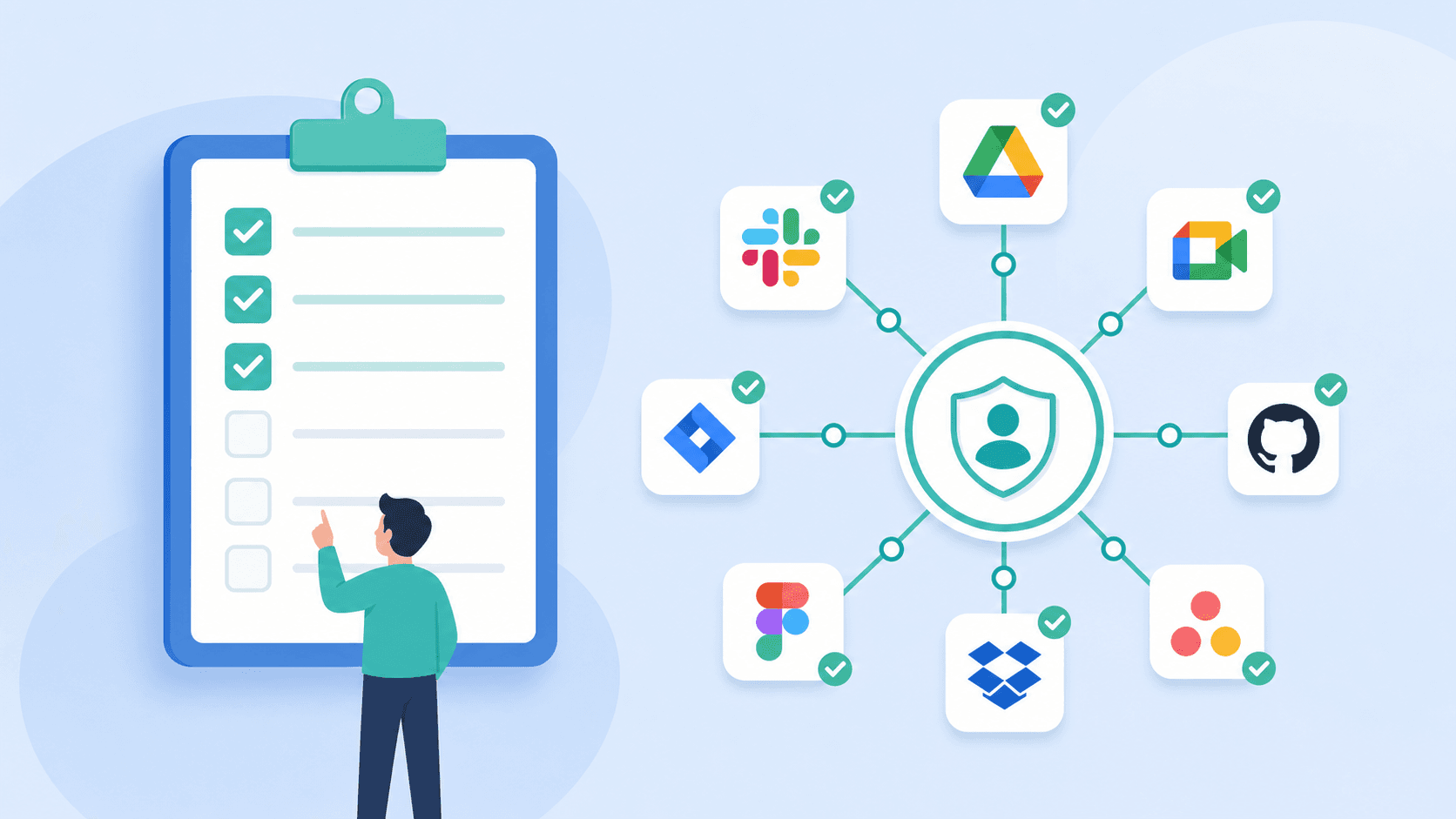
Cakewalk gives teams a clean place to request and approve access and a single view of their apps. Requests live in Slack and approvals route to app owners. The teams we talked to hit a wall in the next step: getting the access work itself done inside each app, without someone doing it by hand and recording it twice.
Provisioning is still catching up
Cakewalk started as a request and approval layer. Automated provisioning came later.
A 2024 review of Cakewalk on G2 described it this way:
"Cakewalk doesn't integrate into individual applications to grab user lists or automatically revoke or provision access."
Senior IT Systems Engineer, mid-market company, G2 review of Cakewalk, September 2024
Cakewalk's own changelog dates "the beginnings of Auto-Provisioning" to March 2025. Removing accounts inside apps came even later. The December 2025 entry on auto-deprovisioning says an offboarding "now removes the account in the app, not just the record in Cakewalk." Until then, offboarding in Cakewalk updated Cakewalk's record, and someone still had to remove the account in each app.
Cakewalk only moved popular apps like Figma to browser automation in August 2026. AccessOwl has worked this way from the start. It covers 496 SaaS apps each with provisioning and deprovisioning. Cakewalk's docs list 75 apps with provisioning and 64 with deprovisioning.
The work moves instead of going away
Cakewalk's documentation is direct about the default: "Task-based provisioning is the default in Cakewalk. Admins or App Owners act on requests and provision/revoke access directly." For apps outside Agent Cake's list, a person opens the app, makes the change, and marks the task done.
Lifecycle events start with a person too. When the HRIS adds a new hire or a leaver, Cakewalk's docs say it creates a "Review onboarding" or "Review offboarding" task that must be confirmed before anything happens. Admins can skip the review for onboarding, group by group. The docs list no equivalent for offboarding.
An information security manager we talked to at a company using Cakewalk described the result for access audits:
"You basically need to do things in parallel. You do access audit in the system, and then you have to duplicate it in cakewalk."
Information security manager, 400-person software company
Her IT colleague described what that did to the audit itself:
"It kind of spreads out the work throughout the year instead of just having it bulked at one point. And it's still a lot of work to do the access audit."
IT specialist, 400-person software company
The access data doesn't match the apps
An access review only works if the tool's user list matches each app. Cakewalk's docs list access sync, which pulls the real user list from an app, for 18 apps. Elsewhere, Cakewalk's records come from requests, tasks and the browser extension.
The IT specialist at the same company described what their audits looked like:
"Recently when doing an access audit we saw 320 users in Cakewalk and 400 users in the tool."
IT specialist, 400-person software company
Comparing Cakewalk v.s. AccessOwl: Features and Pricing
Cakewalk | AccessOwl | |
|---|---|---|
Built for | Mid-market B2B companies of "roughly 100 to 800 employees" | Companies from around 30 employees to several hundred; solo IT admins and small IT teams |
Primary identity provider | Google Workspace, Microsoft Entra ID and Okta | Built for Google Workspace and Microsoft Entra; also integrates with Okta |
How apps are provisioned | Service accounts with browser automation (Agent Cake) or vendor APIs; task-based by default; IdP group sync | Service accounts and browser automation for most apps; APIs, SCIM, or IdP group sync where it fits. |
Apps with automated provisioning | 75 integration guides with provisioning, 64 with deprovisioning | 496 SaaS apps, each with provisioning and deprovisioning |
Shadow IT discovery | Browser extension, plus Google Workspace and Entra sign-in logs | Google Workspace and Microsoft 365 sign-in logs, plus invitation-email scanning; no browser extension |
Self-service access requests | Slack, web app and browser extension | Slack and web dashboard with app tiles |
Assistants and API | Agent Cake chat assistant in Slack; open API; read-only MCP server | Claude in Slack (Claude Tag); public REST API; MCP coming soon |
Time-based access | Yes, launched October 2026 | Yes |
Pricing | Not published; demo first | Public pricing; $250/month spend minimum; no seat or employee minimum; 7-day free trial |
App counts from Cakewalk's integration-guide documentation and AccessOwl's integrations page. October 2026.
Provisioning and app coverage
Cakewalk
Agent Cake: Cakewalk's provisioning agent "signs in to the app with a scoped service account and performs the change directly." Where an app's standard plan includes a provisioning API, it uses that instead.
5,600+ supported, 75 automated: Cakewalk's product pages advertise over 5,600 supported apps. Its integration guides list 75 with provisioning, 64 with deprovisioning, and 18 with access sync.
Task-based by default: Apps without an Agent Cake integration become tasks for an admin or app owner. When an automated run fails, Cakewalk falls back to a manual task.
Activated app by app: Agent Cake is switched on per app. Each app has its own guide and settings.
"The AI Agents for access provisioning is a very promising feature, and we are excited to see the number of supported apps for it continue to expand."
Finance & Operations Specialist, mid-market company, G2 review of Cakewalk, June 2025
AccessOwl
Provisioning through service accounts: Most provisioning runs through browser automation on a service account. SCIM, APIs and other connectors are still available where they make more sense.
Apps without SCIM or APIs: AccessOwl can cover apps that don't offer SCIM or an API at all. Our Notion, Asana, Cursor and Lucidchart integrations need no specific plan.
Public catalog: 500+ marketed integrations, of which 496 are SaaS apps, each with provisioning and deprovisioning.
"Every single app except for two at this company are now being managed through AccessOwl"
Shane Fritts, Sr. IT Manager, from Maxio's success story
Integrations with IdP & HRIS systems
Cakewalk
Identity providers: Google Workspace, Microsoft Entra ID and Okta.
HR systems: Cakewalk documents setup for 21 HR systems, including Personio, HiBob, BambooHR, Rippling, Deel and Workday.
HRIS-triggered workflows: New hires and leavers start onboarding or offboarding. By default each one creates a review task that someone confirms first.
AccessOwl
HR systems: Connects to 54 HRIS systems out of the box.
Works with what you have: Sits on top of Google or Microsoft with no migration, and can be live within a day.
Google Workspace and Microsoft first: Designed for teams whose primary identity layer is Google Workspace or Microsoft Entra.
Okta: Okta is supported too.
Onboarding and Offboarding

Cakewalk
Group-based access: New hires get the apps their groups carry by default.
Review step first: HRIS or IdP changes create a review task. No-touch onboarding can skip it for chosen IdP groups.
Offboarding: A team lead confirms, then access is removed through Agent Cake, the IdP, or as a task for the app owner.
Successors required: Before a manager or app owner is offboarded, Cakewalk asks for a successor for each direct report and each owned app.
AccessOwl
HRIS-triggered onboarding: A start date in your HRIS kicks off onboarding. The employee's access template is determined from their role. Managers can make small changes for the individual role if needed.
Access ready on the first morning: AccessOwl creates the accounts and permissions inside each app, including Slack channels and team spaces.
HRIS-triggered offboarding: An end date in your HRIS triggers offboarding once the employee's last workday ends. AccessOwl revokes access inside each app and logs every action as audit evidence.
At Maxio, onboarding a new hire used to take 45 minutes to an hour. With a role template in AccessOwl, Shane Fritts told us:
"Five to ten minutes if you're not distracted, tops"
Shane Fritts, Sr. IT Manager, from Maxio's success story
Shadow IT discovery
Cakewalk
Browser extension: Cakewalk's extension "recognizes and maps 6,000 apps" in Chrome, Edge, Firefox and other Chromium browsers. IT can force-install it through an MDM.
Sign-in logs: Cakewalk also reads Google Workspace and Entra sign-in logs and OAuth grants.
Coverage depends on each employee: After an MDM rollout, "users need to log in once to activate it." It only sees apps used in a supported browser.
Optional confirmation step: Admins can have the extension ask employees to confirm each app before it's recorded.
An information security manager at a 150-person hospitality software company we talked to described that confirmation step in her setup:
"I'm also not a fan of the browser extension. Our users are on a different browser. And it's up to the user to say yes or no. So it's not automatic."
Information security manager, 150-person hospitality software company
AccessOwl
Sign-in log analysis: AccessOwl reads Google Workspace and Microsoft sign-in logs. It surfaces every app employees signed into with "Sign in with Google" or Microsoft, along with who used it.
Email and invitation scanning: An optional scan catches apps people signed up for with an email and password instead of social login. It only reads sender patterns, never email content.
No installation required: There's no browser extension or endpoint agent, so coverage doesn't depend on employees installing or logging into anything.
Shadow IT scan during offboarding: Offboarding lists apps the employee signed up for outside of IT's visibility, such as password sign-ups or "Sign in with Google" accounts. These usually get missed and later turn into audit findings.
Across our customer environments, employees have usually signed up for 5x more apps than IT manages. Before AccessOwl, Maxio had almost no insight into Shadow IT. Now its IT lead gets pinged whenever someone signs up for a new tool with their company email:
"AccessOwl's Shadow IT features are just unmatched."
Shane Fritts, Sr. IT Manager, from Maxio's success story
Self service access requests
Cakewalk
Requests in Slack: Employees ask in Slack, the web app or the browser extension. Approvers act without leaving Slack.
Policy builder: Approval chains can be set globally, per app, or per permission level.
Chat assistant: Agent Cake's Slack assistant files requests from a plain message. It never grants access without approval.
Time-based access: Added in October 2026. Access and admin rights can carry an end date.
AccessOwl
Request from Slack or the web: Employees request apps and permission levels in a few clicks in Slack, or through a web portal. Managers can also request access on behalf of colleagues and contractors.
Approvals routed to the right person: Approvers get a 1-click task in Slack, email or the web dashboard. Usually that's the manager or IT admin. You can also add a multi-step chain or require stricter sign-off for admin roles.
Provisioned once approved: When the last approver signs off, AccessOwl creates the account at the requested permission level. Apps without an integration go to the tool owner as a tracked task.
Every request and action is recorded: Each request, approval and change is logged with who asked, who approved and when. The log is ready to hand to an auditor.
AccessOwl also supports time-based access. Grant it for a set period, such as a contractor engagement or a few days on a sensitive system, and AccessOwl removes it when the period ends.
Access Reviews and Audit Evidence
Cakewalk
Review campaigns: Managers, app owners or a review owner decide on each user, with Slack and email reminders.
Exports: Results export as CSV. Cakewalk advertises one-click evidence packs for ISO 27001, SOC 2, NIS 2 and HIPAA.
Compliance platforms alongside: Cakewalk's blog says most customers pair it with Vanta, Drata or Secureframe.
AccessOwl
User lists pulled automatically: AccessOwl pulls users and permissions from each connected app. It flags former employees and accounts that don't match anyone in your directory.
Context for every decision: Reviewers get a decision request showing how access was granted, who approved it, past review decisions and recent permission changes. They approve, change or revoke from the same screen.
Revoked in the same session: When a reviewer flags access, AccessOwl removes it right away. There's no separate cleanup ticket between finding the problem and fixing it.
Evidence ready for auditors: Every decision is logged with the reviewer's reason and exported automatically. Reports can be exported or pushed to Vanta for SOC 2 and ISO 27001 audits.
At Maxio, access reviews went from 2 to 3 hours per app to ten to fifteen minutes.
Pricing
Cakewalk
Not published: Cakewalk has no public pricing page.
Demo first: Buyers book a demo. Cakewalk offers a "fast-track to a trial if it's a good fit".
AccessOwl
Public pricing: AccessOwl publishes its pricing on its website, so you can estimate your cost before talking to anyone.
Try it first: A 7-day free trial on your own apps.
No seat minimum: There's no seat or employee minimum, only a minimum spend of $250 a month. Teams from around 30 employees use AccessOwl, and it scales as you grow.
No SSO tax: AccessOwl doesn't need SCIM or SAML, so you don't have to upgrade apps to their enterprise plans. That SSO tax can add tens of thousands of dollars a year in hidden costs.
User Reviews: AccessOwl v.s. Cakewalk
Both tools are well reviewed. Cakewalk is rated 4.9 out of 5 on G2 across 28 reviews, with reviewers praising its ease of setup and Slack-based requests. AccessOwl is rated 4.9 out of 5 on G2 and Capterra.
"We regularly use AccessOwl to manage access and auditing of our 100+ applications and to do so without having to setup clunky, cumbersome SAML integrations."
CTO, small business, G2 review of AccessOwl
Who Cakewalk is best for
Cakewalk is a better fit when you:
Are mainly looking for a clean interface to manage access, not full automation
Want browser-extension Shadow IT discovery and can roll an extension out to every employee's browser
Want hands-on setup help from the vendor
Are comfortable keeping provisioning manual while Cakewalk's automated app list grows
Who AccessOwl is better for
AccessOwl is a better fit than Cakewalk when you:
Want provisioning that works out of the box across hundreds of apps today, not a list of automated apps that's still being built out
Want accounts created and removed inside your apps, not tracked beside them
Want your access reviews to match what each app actually holds
Want onboarding and offboarding to start from your HRIS without a confirmation step
Have a small IT team or one person, and around 30 employees up to several hundred
Questions to decide between Cakewalk and AccessOwl
How many of your apps will be provisioned and deprovisioned automatically today, not discovered or on a roadmap?
When an app is "supported", what does that mean for that app: discovered, synced, or fully automated?
After rollout, how much will your team still do by hand in each app and then record again?
Does your next access review need user lists pulled from the apps themselves?
Note: This article was written on October 5, 2026 with information available to us from conversations with buyers and public information about Cakewalk. If any information is inaccurate or misrepresents Cakewalk, get in touch with us.
FAQs
Does Cakewalk support automated provisioning?
Yes, but for a small catalog. Cakewalk's changelog dates the start of auto-provisioning to March 2025, and removing accounts inside apps to December 2025. Its provisioning agent, Agent Cake, signs in to each app with a service account. Cakewalk's integration guides list 75 apps with provisioning and 64 with deprovisioning. Other apps are handled as tasks for an admin or app owner. AccessOwl provisions and deprovisions in 496 SaaS apps through service accounts and browser automation.
How does Cakewalk discover Shadow IT?
Cakewalk uses a browser extension that maps about 6,000 apps, plus Google Workspace and Entra sign-in logs. IT can force-install the extension, but each employee has to log in to it once, and it only sees browser activity. Admins can also have it ask employees to confirm each app. AccessOwl reads Google Workspace and Microsoft 365 sign-in logs and scans for app invitation emails, which catches password sign-ups without installing anything.
How much does Cakewalk cost?
Cakewalk doesn't publish its prices. You book a demo to get a quote. AccessOwl publishes its pricing, with a $250 monthly minimum and a 7-day free trial.
What are the best alternatives to Cakewalk?
AccessOwl is the closest alternative for teams from around 30 employees to several hundred that want most of their apps provisioned and deprovisioned automatically.
When should I choose AccessOwl as the alternative to Cakewalk?
AccessOwl is the right alternative to Cakewalk when you want provisioning that works out of the box across hundreds of apps today; want accounts created and removed inside your apps; want access reviews built on each app's real user list; want onboarding and offboarding to start from your HRIS; and have a small IT team at a company of around 30 employees up to several hundred.
How do I know if Cakewalk is the right solution for me?
Are you mainly looking for a clean interface to manage access, rather than full automation? Do you want browser-extension Shadow IT discovery, and can you roll an extension out to every employee's browser? Do you want hands-on setup help from the vendor? Are you comfortable keeping provisioning manual while Cakewalk's automated app list grows? If most of the answers are yes, Cakewalk is likely a strong fit.